Third-Party Testing: Why Peptide Purity Defines Research Quality
In an unregulated market, the Certificate of Analysis separates legitimate research compounds from unknown substances.
The research peptide market operates without FDA oversight. No required testing. No quality floor. Any company can label a vial “BPC-157.” Whether it actually contains BPC-157—at the stated purity—depends entirely on vendor practices.
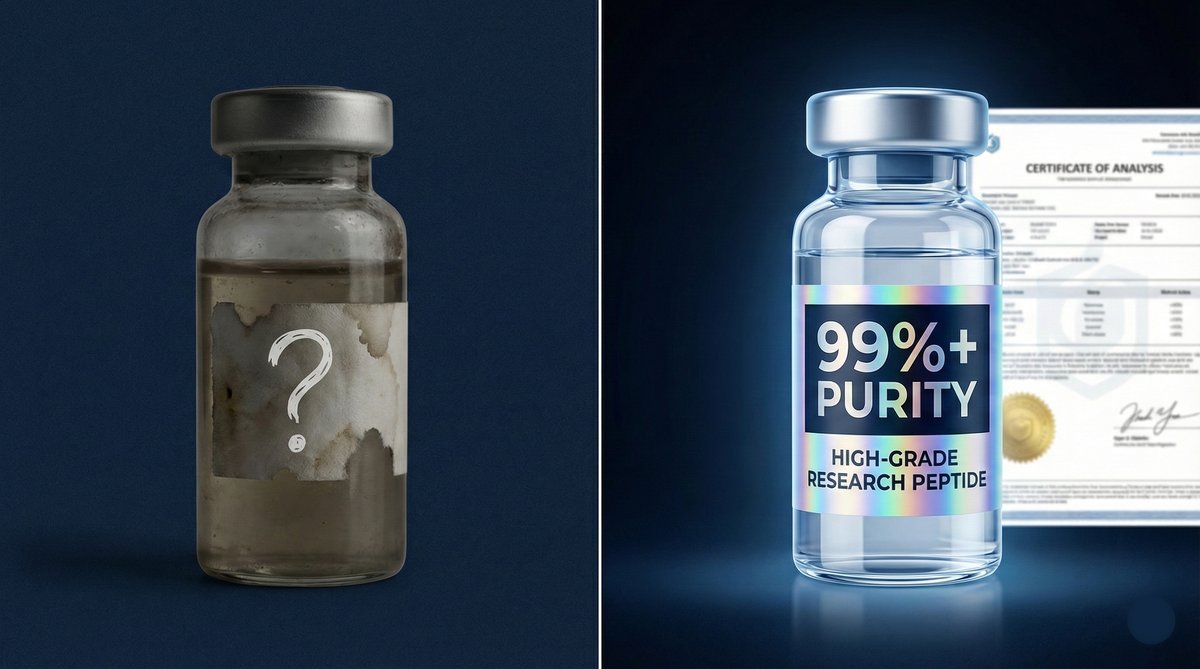
This creates a significant problem for legitimate research applications.
The Testing Landscape
Vendors in the research peptide market fall into three categories:
Category 1: No verification. These operations purchase bulk powder from overseas suppliers, repackage it, and sell without testing. No COA. No analytical verification. The supply chain is opaque.
Category 2: In-house testing. These vendors run their own tests and issue their own certificates. The conflict of interest is structural—the same organization that profits from sales also certifies quality.
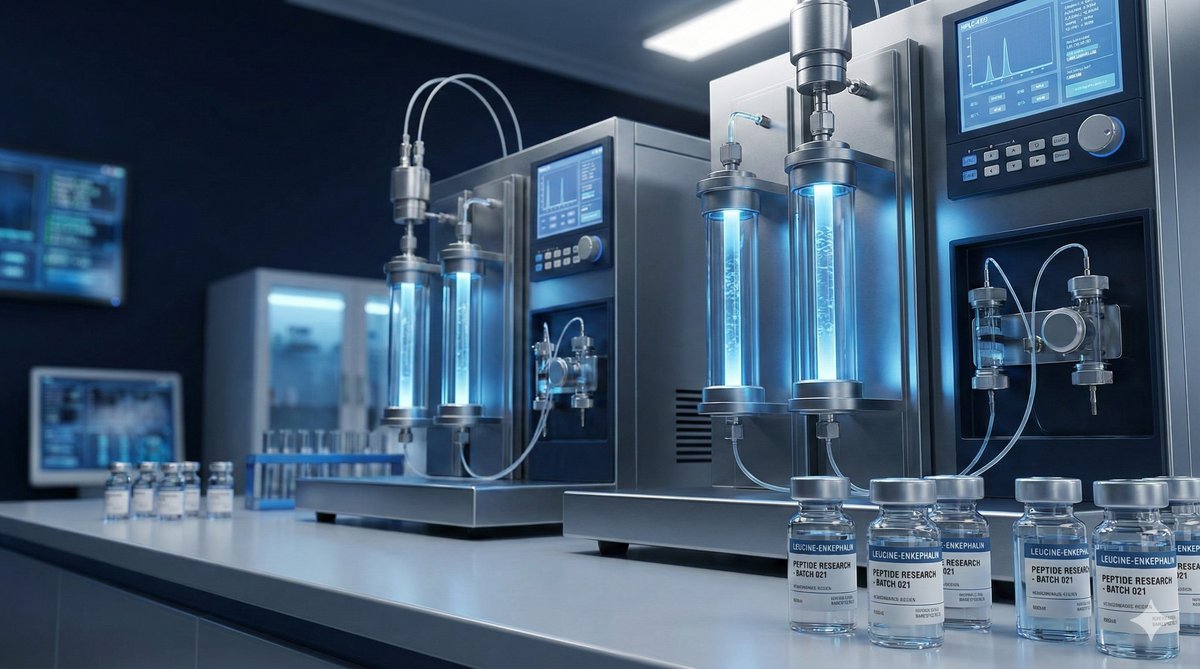
Category 3: Independent third-party verification. External laboratories with no financial stake in results perform analysis. Real equipment, qualified analysts, documented methodology.
Epiq Aminos maintains Category 3 standards. Every batch undergoes independent third-party testing before release.
Analytical Methods: What Gets Tested
High-Performance Liquid Chromatography (HPLC)
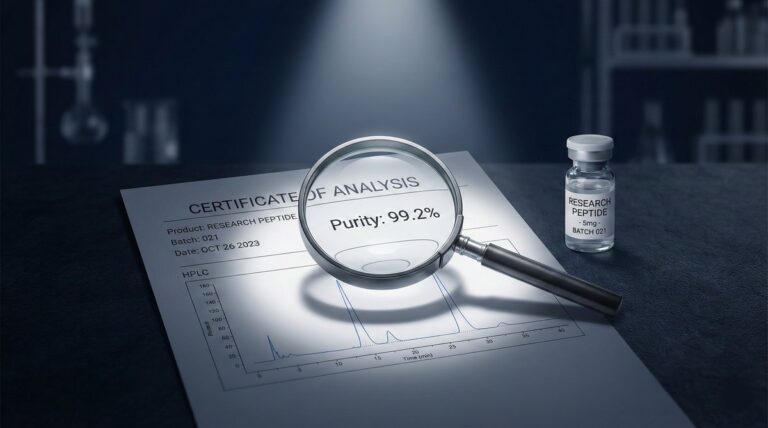
HPLC separates a sample into component parts and measures their relative concentrations. The output: a chromatogram showing peaks for each compound present, with the main peak representing the target peptide.
Purity percentage derives from peak area analysis. A result of “99.2% purity” means 99.2% of detected material is the target compound. The remaining fraction consists of synthesis byproducts, minor degradation products, or trace impurities.
Our standard: purity exceeding 99%.
Mass Spectrometry (MS)
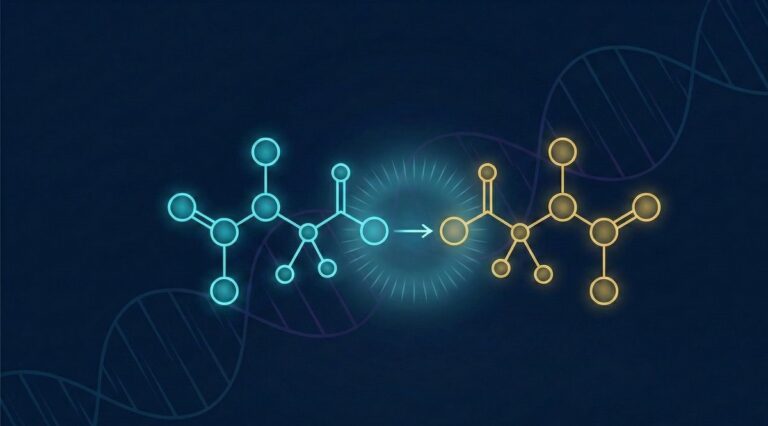
Mass spectrometry confirms molecular identity by measuring the precise mass of molecules in the sample. This verification ensures the compound has the correct amino acid sequence—not just “a peptide,” but the specific peptide specified on the label.
Observed molecular weight must match the expected value within instrument tolerance. Significant deviation indicates incorrect product or contamination.
Amino Acid Sequence Verification
For peptides, sequence determines function. BPC-157 is a specific 15-amino-acid chain: Gly-Glu-Pro-Pro-Pro-Gly-Lys-Pro-Ala-Asp-Asp-Ala-Gly-Leu-Val. A single incorrect amino acid produces a different molecule with different properties.
Our testing confirms sequence accuracy for critical products.
Why 99%+ Purity Matters for Research
Consider the implications of lower purity levels for research applications:
At 95% purity, 5% of the material is not the target compound. That 5% could include:
- Incomplete synthesis fragments
- Degradation products
- Residual solvents from manufacturing
- Other peptide sequences (contamination)
- Unidentified impurities
In research contexts, uncharacterized impurities introduce uncontrolled variables. Observed effects may derive from contaminants rather than the target compound. Results become unreliable. Conclusions become questionable.
At purity exceeding 99%, the target compound dominates the sample. Research observations can be attributed to the specified molecule with confidence.
The Economics of Quality
Third-party analytical testing represents a real cost—per batch, not per product line. Vendors who skip independent testing can undercut prices by 20-30%.
The calculus is straightforward: some vendors prioritize price competition over quality verification. They accept the risk that some batches will be substandard, betting that most customers won’t detect the difference.
Epiq Aminos prioritizes verification over margin optimization. Analytical testing is an operational requirement, not an optional enhancement.
Verifying Claims
Every product on our site includes a Certificate of Analysis showing:
- Purity percentage (HPLC verified, exceeding 99%)
- Molecular weight (MS confirmed)
- Batch number (for traceability)
- Testing date (documentation of recency)
- Laboratory identification (independent verification)
COAs are available on product pages. If a product doesn’t show a linked COA, contact us—we’ll provide it. Products without available COAs don’t ship.
Industry Standards
Reputable vendors in this market maintain similar standards. Peptide Sciences, for example, also claims exceeding 99% purity with third-party verification. They’ve built their reputation on documented quality.
This is the standard Epiq Aminos maintains—not “acceptable for an unregulated market,” but competitive with the most quality-focused vendors in the industry.
What COAs Document
To be precise about scope: our Certificates of Analysis verify identity and purity. They confirm the vial contains the specified compound at research-grade quality.
COAs document:
- Compound identity (molecular weight, sequence)
- Purity level (HPLC analysis)
- Batch traceability (lot number, testing date)
- Testing methodology (laboratory, methods used)
COAs do not constitute:
- Usage instructions or protocols
- Efficacy claims for any application
- Legal advice regarding jurisdiction-specific regulations
The Quality Commitment
Every batch of every product undergoes third-party analytical testing before release. This is an operational requirement, not a marketing position.
The rationale:
- Research integrity — Researchers need verified compounds to produce meaningful data
- Reputation — One substandard batch destroys years of trust. The risk isn’t worth the margin.
- Differentiation — In an unregulated market, verified quality is the primary differentiator
Third-party testing is how quality is demonstrated, not claimed.
Questions about testing methodology or specific COAs? Contact us.
All products are intended for in-vitro research and educational purposes only. Not for human or veterinary use.