Growth Hormone Secretagogues: Research Compounds That Stimulate Endogenous GH Release
Growth hormone secretagogues represent a distinct pharmacological approach from direct GH administration.
Growth hormone (GH) and its regulatory peptides represent one of the most extensively studied areas in endocrinology research. Pharmaceutical somatropin (synthetic HGH) commands prices of $1,000-3,000 monthly through legitimate prescribing channels. Secretagogues offer researchers an alternative mechanism to study: compounds that stimulate pituitary GH release rather than replacing it directly.
Understanding the distinction between these approaches—and the research supporting each compound class—explains the significant scientific interest in secretagogue peptides.
Growth Hormone Physiology: The Baseline
The pituitary gland produces growth hormone in pulsatile patterns, primarily during deep sleep phases. GH stimulates hepatic production of IGF-1 (Insulin-like Growth Factor 1), which mediates most downstream effects:
- Lipid and protein metabolism — Research documents effects on lean mass and fat mass ratios
- Tissue biology — Cell proliferation and differentiation pathways
- Circadian biology — GH secretion patterns and sleep-stage correlations
- Extracellular matrix — Collagen synthesis and connective tissue turnover
- Bone metabolism — Osteoblast and osteoclast regulation
- Neuroendocrine interactions — CNS receptor distribution and signaling
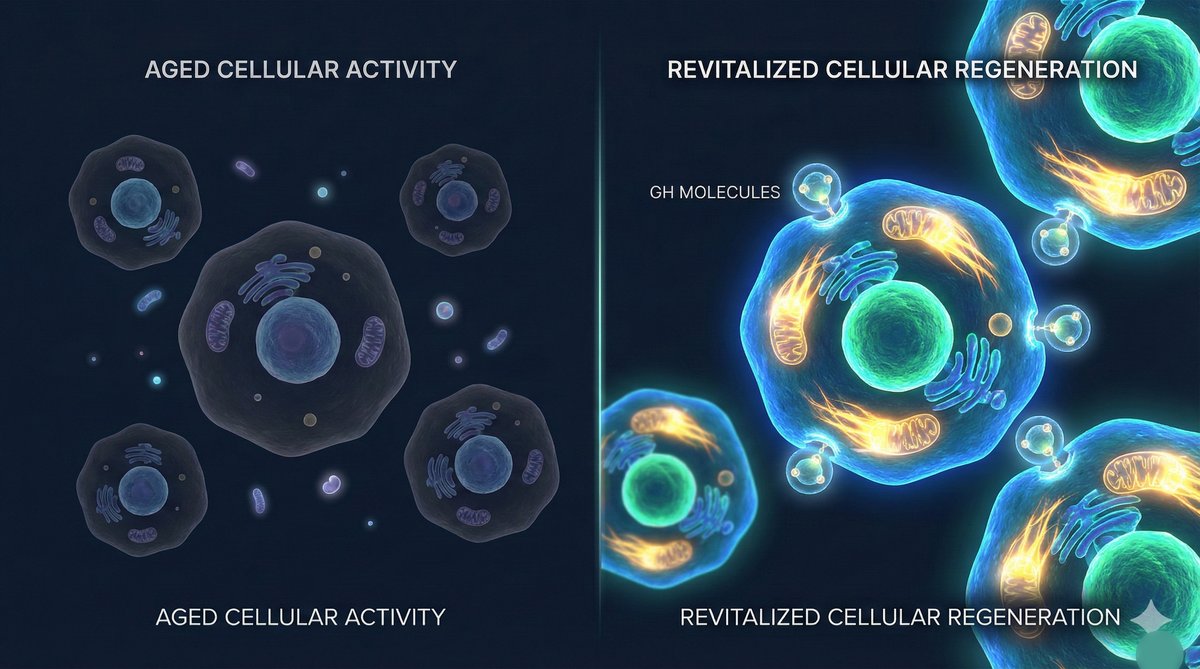
GH secretion follows well-characterized age-related patterns, with documented changes in pulse amplitude and frequency across the lifespan (somatopause) in human populations. This decline correlates with many physiological changes associated with aging, driving significant research interest in GH-related interventions.
Two Approaches: Direct GH vs. Secretagogues
Synthetic HGH (Somatropin)
Mechanism: Direct administration of recombinant human growth hormone
Pharmaceutical brands: Genotropin, Norditropin, Humatrope
Cost: $1,000-3,000/month through prescription channels
Characteristics in research:
- Bypasses endogenous feedback systems
- Produces constant elevated GH (versus natural pulsatile release)
- Higher incidence of side effects at supraphysiological doses
- May suppress natural GH production over extended administration periods
Secretagogues
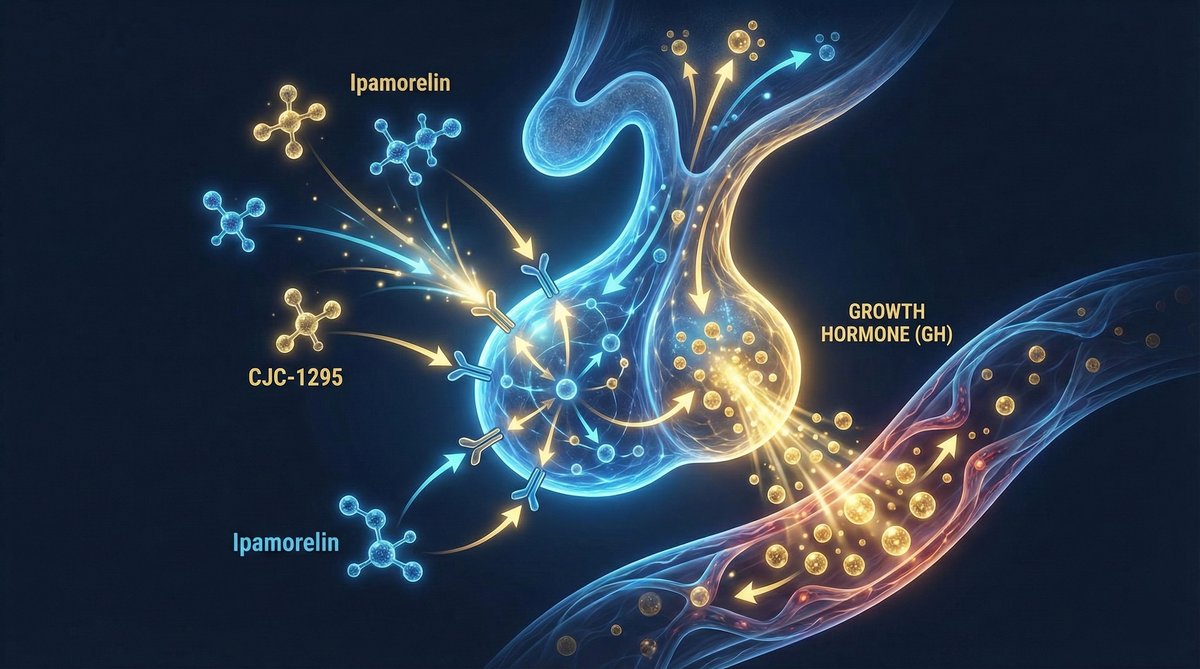
Mechanism: Stimulate pituitary gland to increase endogenous GH production
Examples: CJC-1295, Ipamorelin, GHRP-6, MK-677, Sermorelin
Cost: Significantly lower than pharmaceutical somatropin
Characteristics in research:
- Work within natural feedback mechanisms
- Maintain pulsatile GH release patterns
- Preserve physiological pulsatile release patterns
- Generally more favorable side effect profiles in studies
GHRH Analogs: Growth Hormone Releasing Hormone Compounds
These compounds mimic the natural hormone that signals pituitary GH release.
CJC-1295
A modified GHRH analog with extended half-life. Two variants exist:
CJC-1295 with DAC (Drug Affinity Complex): The DAC modification enables albumin binding, extending plasma half-life to days rather than minutes. Research shows sustained GH and IGF-1 elevation over extended periods. Phase 2 clinical trials documented dose-dependent effects.
CJC-1295 without DAC (Mod GRF 1-29): Shorter acting variant producing more acute GH pulses. Provides researchers more precise control over timing.
- CJC-1295 with DAC — Extended release formulation
- CJC-1295 without DAC — Shorter acting variant
Sermorelin
The first 29 amino acids of natural GHRH. Sermorelin achieved FDA approval for pediatric GH deficiency (largely replaced by newer compounds in clinical practice). This approval history provides extensive human safety data—unusual for this compound class.
Often considered the baseline reference compound for secretagogue research due to its regulatory history and documented profile.
- Sermorelin — The foundational GHRH analog
Tesamorelin
FDA-approved for HIV-associated lipodystrophy (abnormal fat distribution). Clinical trials demonstrated reduction in visceral adipose tissue and improvements in body composition markers. One of the few secretagogues with active FDA approval for a specific indication.
This approval status provides researchers with extensive published human trial data.
- Tesamorelin — FDA-approved GHRH analog
GHRPs: Growth Hormone Releasing Peptides
These compounds activate the ghrelin receptor (GHS-R1a) to trigger GH release—a different pathway than GHRH analogs. Research often combines both classes to study synergistic effects.
Ipamorelin
Characterized as the most selective GHRP in research. Studies show GH release with minimal effect on cortisol or prolactin—distinguishing it from other GHRP compounds. This selectivity makes it valuable for research requiring isolated GH pathway study.
- Ipamorelin — Selective GH releasing peptide
GHRP-6
Potent GH releaser with significant ghrelin mimetic effects, including appetite stimulation. Research documents effects on cortisol and prolactin beyond those seen with Ipamorelin. The appetite effect is notable—some researchers view it as relevant to their studies, others as a confounding variable.
- GHRP-6 — Potent GHRP with appetite effects
Hexarelin
The most potent GHRP for acute GH release in comparative studies. Research shows dramatic GH spikes following administration. However, studies also suggest more rapid receptor desensitization with repeated exposure compared to Ipamorelin.
- Hexarelin — Maximum acute GH release
Combination Research
Published research suggests GHRH analogs and GHRPs produce synergistic effects when combined. The hypothesis: GHRH “primes” pituitary somatotrophs while GHRP triggers release. Our CJC-1295/Ipamorelin Blend combines these for researchers studying this interaction.
MK-677: The Oral Secretagogue
MK-677 (Ibutamoren)
Not technically a peptide—MK-677 is a small molecule ghrelin mimetic with oral bioavailability. Key research characteristics:
- Available as an oral compound for laboratory research
- Extended half-life (~24 hours) enabling once-daily research protocols
- Sustained elevation of GH and IGF-1 in studies
- Extensive human research data available
Published studies in elderly subjects documented significant increases in GH secretion, effects on endocrine markers and metabolic parameters. A 2-year study provides longer-term data than available for most secretagogues.
MK-677 represents the most extensively studied oral GH secretagogue compound.
- MK-677 — Oral GH secretagogue
Published Clinical Evidence
Secretagogues have accumulated substantial human research data:
CJC-1295: Phase 2 clinical trials documented dose-dependent increases in GH and IGF-1 levels sustained over weeks of administration. Published in peer-reviewed endocrinology journals.
Ipamorelin: Studies demonstrate selective GH release without significant effects on cortisol, aldosterone, or prolactin—differentiating it from less selective GHRPs in controlled comparisons.
MK-677: Multiple human studies including a 2-year trial in elderly subjects. Published data shows sustained GH/IGF-1 increases and body composition effects. The longest-duration secretagogue study available.
Tesamorelin: FDA approval based on controlled clinical trials demonstrating reduction in visceral adipose tissue. Regulatory submission documents provide extensive efficacy and safety data.
This evidence base distinguishes secretagogues from compounds with only animal or cell culture data—substantial human research exists.
Global Regulatory Context
In the United States, most secretagogues carry research chemical classification. Prescription access is limited (exceptions include Tesamorelin for specific conditions and some compounding pharmacy formulations).
Regulatory frameworks differ by jurisdiction:
- Australia: Some secretagogues accessible through compounding pharmacies under physician supervision
- Thailand: Broader availability through medical tourism channels
- Europe: Varies by country; some permit prescribing for specific indications
- Asia: Clinical use in anti-aging medicine more common than in US
These differences reflect regulatory philosophy variations, not scientific disagreement about compound properties.
Research Applications
Growth hormone secretagogues serve multiple in-vitro and research purposes:
- Receptor binding studies — GHS-R1a characterization, GHRH receptor interactions
- Signaling pathway research — Downstream effects of receptor activation
- Comparative pharmacology — GHRH vs GHRP mechanisms, selectivity profiles
- Combination effect studies — Synergy between compound classes
- Stability and formulation — Storage condition optimization
Quality Standards
All Epiq Aminos secretagogues undergo third-party verification:
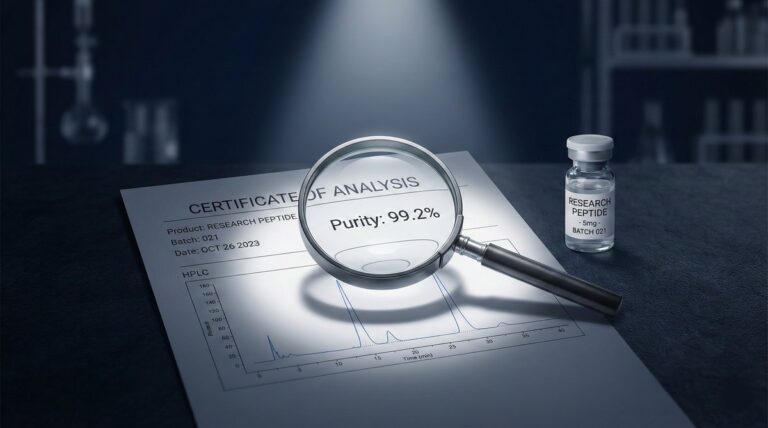
- Purity exceeding 99% (HPLC verified)
- Molecular identity confirmed (Mass Spectrometry)
- Certificates of Analysis on every product page
- Batch traceability for quality assurance
Research-grade GH secretagogues: CJC-1295 | Ipamorelin | Sermorelin | MK-677 | GHRP-6 | Tesamorelin
All products sold by Epiq Aminos are intended for in-vitro research and educational purposes only. Not for human consumption. Not intended to diagnose, treat, cure, or prevent any disease.