Tissue Repair Peptides: Published Research on BPC-157 and TB-500
BPC-157 and TB-500 represent two of the most extensively studied peptides in tissue repair research.
The published literature on these compounds spans decades and hundreds of peer-reviewed papers. Animal studies, cell culture experiments, and mechanistic research have characterized their effects on various tissue types. Understanding this research explains the significant scientific interest in these molecules.

BPC-157: Body Protection Compound
BPC-157 is a 15-amino-acid peptide derived from a protein found in human gastric juice. The sequence: Gly-Glu-Pro-Pro-Pro-Gly-Lys-Pro-Ala-Asp-Asp-Ala-Gly-Leu-Val (molecular weight: 1,419.53 Da, CAS: 137525-51-0).
The name “Body Protection Compound” reflects observed protective effects across multiple tissue systems in animal research.
Published Research Findings
Tendon and ligament studies: Multiple studies in rat models have demonstrated accelerated healing of transected Achilles tendons in rat models, with improved biomechanical properties compared to control groups. Similar results documented in studies on medial collateral ligament injuries. Published in journals including Journal of Orthopaedic Research and Journal of Physiology-Paris.
Muscle tissue research: Studies show accelerated recovery from muscle crush injuries in rodent models and improved regeneration of damaged muscle tissue in animal models. Mechanism research suggests effects on growth factor expression and satellite cell activation.
Gastrointestinal research: Extensive literature on inflammatory bowel models, gastric ulcers, and intestinal damage. BPC-157 has shown protective effects against NSAID-induced gut damage in multiple rodent studies. This research area reflects the peptide’s origin from gastric protective proteins.
Bone-tendon junction: Studies demonstrate effects on bone-tendon junction healing and fracture repair in rabbit models. Research published in Journal of Orthopaedic Surgery and Research.
Neuroprotection research: Published studies suggest protective effects against certain neurotoxins and potential involvement in peripheral nerve regeneration pathways.
Toxicity Data
Toxicity studies in rodent models have documented high tolerance thresholds. No significant adverse effects observed at doses many times higher than those used in efficacy studies. Published research has not established an LD50 at practical concentrations—researchers could not identify a lethal dose range.
This safety margin in animal models is unusually wide compared to many pharmacologically active compounds.
Regulatory Context
BPC-157 has not completed the FDA approval process. No company has funded the $1-2 billion required for human clinical trials and regulatory submission.
The economic reason: BPC-157 is a naturally-occurring peptide fragment. It cannot be patented. Without patent protection, no pharmaceutical company has financial incentive to pursue FDA approval for a molecule any laboratory can synthesize.
The compound is sold as a dietary supplement in several countries outside the United States. The RUO classification reflects US regulatory requirements, not a global scientific assessment.
TB-500: Thymosin Beta-4 Fragment
TB-500 is a synthetic version of a 43-amino-acid segment of Thymosin Beta-4, a protein produced at elevated concentrations at injury sites. The compound has decades of use in veterinary medicine.
Mechanism Research
Cell migration: Thymosin Beta-4 promotes cell migration to wound sites—a critical early step in tissue repair cascades. Research demonstrates effects on actin polymerization and cytoskeletal organization.
Angiogenesis: Published studies document promotion of new blood vessel formation, potentially improving blood supply to damaged tissues. Mechanism involves VEGF pathway interactions.
Anti-inflammatory effects: Studies show modulation of inflammatory responses, potentially reducing excessive inflammation that impairs healing processes.
Cardiac research: Significant research interest exists in cardiac tissue repair following ischemic injury. Multiple studies in mouse and rat models of heart damage have been published in cardiovascular research journals.
Veterinary Applications
TB-500 has been documented in veterinary medicine contexts, particularly for equine applications. Racehorses receive the compound for tendon and ligament injuries. Racing greyhounds are treated for soft tissue damage.
This published veterinary literature provides additional data points for understanding the compound’s biological effects across mammalian species.
Combination Research: BPC-157 + TB-500
Many researchers study BPC-157 and TB-500 in combination, investigating potentially complementary mechanisms:
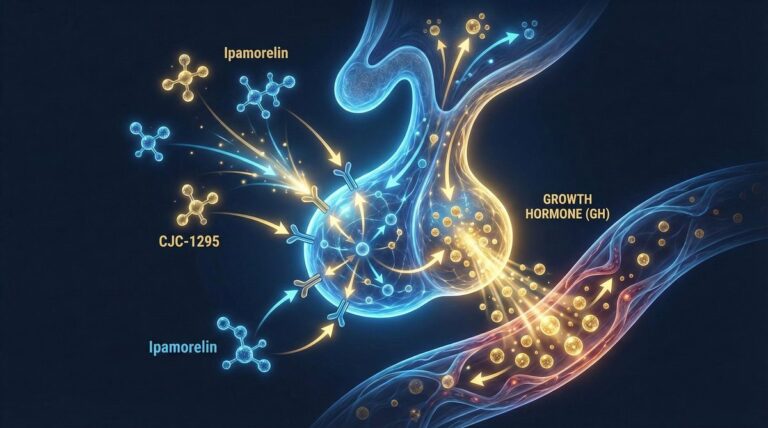
- BPC-157: Research suggests activity through growth hormone receptor pathways, the nitric oxide system, and FAK-paxillin signaling
- TB-500: Primarily promotes cell migration and angiogenesis through actin regulation mechanisms
The hypothesis: different primary mechanisms might produce additive or synergistic effects when combined. Several research groups have published combination studies.
Our Wolverine Blend provides BPC-157 (5mg) and TB-500 (5mg) combined for researchers investigating this interaction.
Related Compounds
GHK-Cu (Copper Peptide)
A tripeptide (Gly-His-Lys) with high affinity for copper ions (molecular weight: 403.89 Da). Research shows effects on collagen synthesis, wound healing, and anti-inflammatory activity. Widely used in cosmetic applications; research continues on systemic tissue effects.
KPV
A tripeptide (Lys-Pro-Val) derived from alpha-MSH with documented anti-inflammatory properties in cell culture and animal studies. Research focuses on gut inflammation models and immune modulation pathways.
Our GLOW Blend combines GHK-Cu (50mg), BPC-157 (10mg), and TB-500 (10mg). The KLOW Blend adds KPV (10mg) to that combination.
Research Limitations
Scientific integrity requires acknowledging what the current literature does not establish:
- No completed human clinical trials for BPC-157 or TB-500. All controlled efficacy data derives from animal studies and cell culture experiments.
- Optimal research protocols undefined — Standardized dosing, frequency, and duration have not been established through controlled comparative research.
- Long-term studies limited — Most published research involves short-term administration; multi-year data in any species is scarce.
- Individual variation uncharacterized — Response variation based on genetic factors, injury types, and other variables hasn’t been systematically studied.
The research literature is promising and extensive. It is not conclusive regarding human applications.
Quality Requirements
For meaningful research with tissue repair peptides, compound verification is essential:
- Correct compound — Verified amino acid sequence, not a mislabeled product
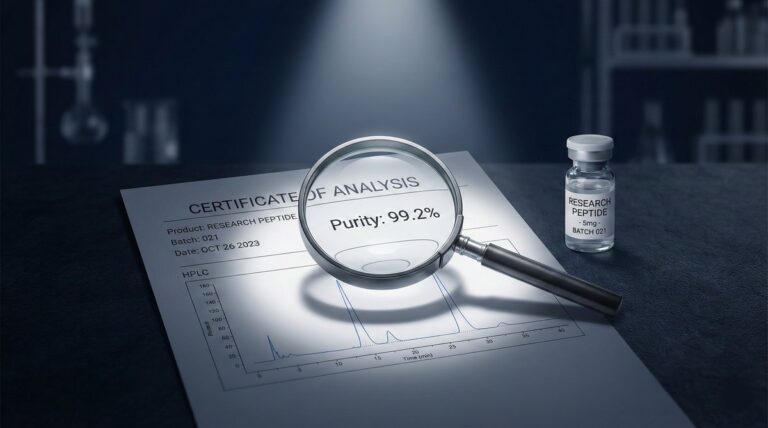
- Stated purity — Exceeding 99%, not diluted with unknown contaminants
- Traceable source — Batch numbers, COAs, documented supply chain
Every tissue repair peptide from Epiq Aminos includes third-party HPLC and MS verification. Certificates of Analysis are available on product pages, documenting purity exceeding 99%.
Research-Grade Tissue Repair Peptides
BPC-157 — 15-amino-acid gastric-derived peptide
TB-500 — Thymosin Beta-4 fragment
Wolverine Blend — BPC-157 (5mg) + TB-500 (5mg)
GLOW Blend — GHK-Cu (50mg) + BPC-157 (10mg) + TB-500 (10mg)
KLOW Blend — GHK-Cu (50mg) + KPV (10mg) + BPC-157 (10mg) + TB-500 (10mg)
All products sold by Epiq Aminos are intended for in-vitro research and educational purposes only. Not for human consumption. Not intended to diagnose, treat, cure, or prevent any disease.