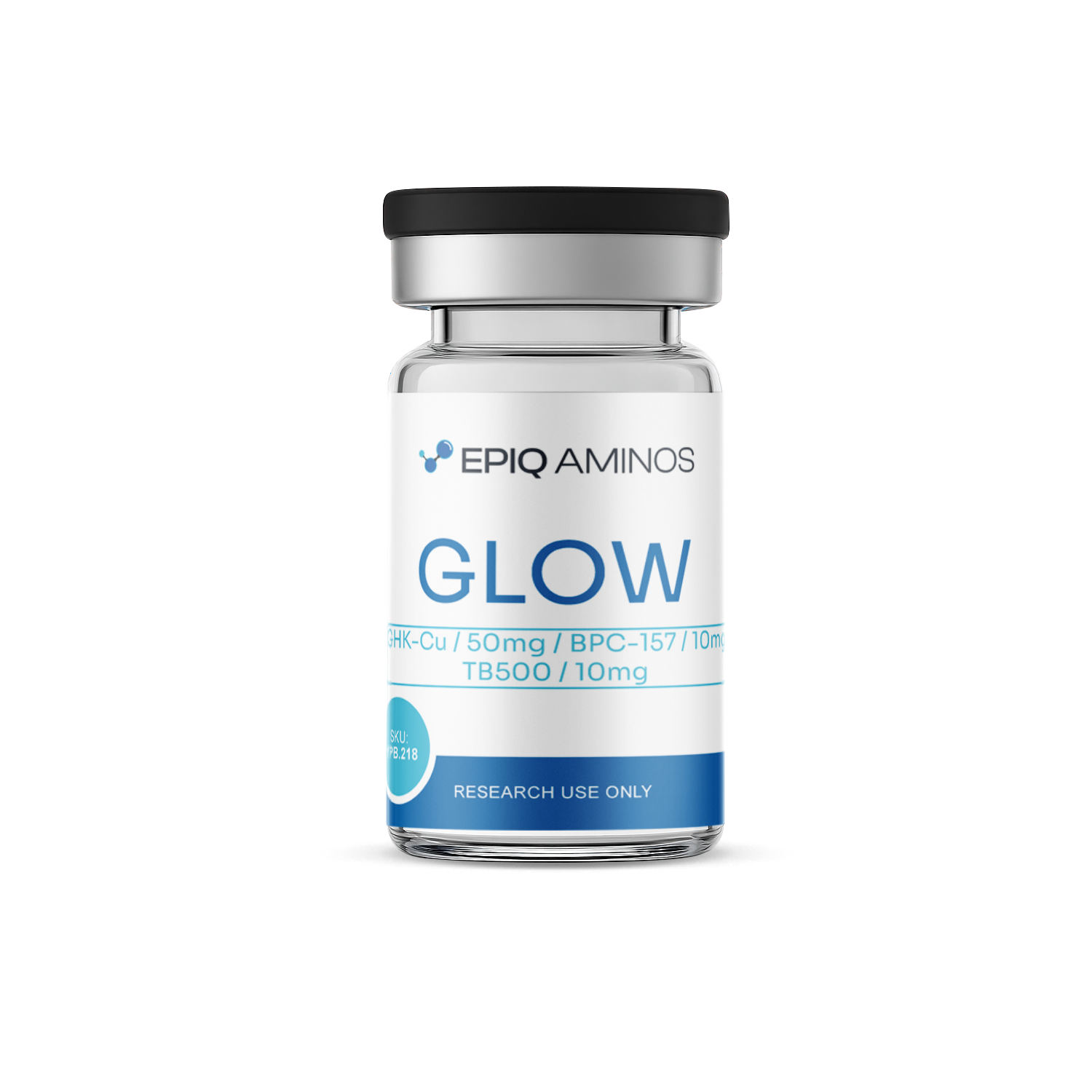
GLOW GHK-Cu (50mg) / BPC-157 (10mg) / TB500 (10mg)
$165.00
Premium research-grade peptide supplied for controlled research environments. Every batch tested and verified for your research protocols.
Description
Molecular Data
Classification: Multi-Peptide Regenerative Blend
Component 1: GHK-Cu (50mg)
- Molecular Formula: C₁₄H₂₂CuN₆O₄
- Molecular Weight: 403.92 Da
- CAS Number: 49557-75-7
- Sequence: Gly-His-Lys (copper complex)
Component 2: BPC-157 (10mg)
- Molecular Formula: C₆₂H₉₈N₁₆O₂₂
- Molecular Weight: 1,419.53 Da
- CAS Number: 137525-51-0
- Sequence: Gly-Glu-Pro-Pro-Pro-Gly-Lys-Pro-Ala-Asp-Asp-Ala-Gly-Leu-Val
Component 3: TB-500 / Thymosin Beta-4 Fragment (10mg)
- Molecular Formula: C₂₁₂H₃₅₀N₅₆O₇₈S
- Molecular Weight: 4,963.44 Da
- CAS Number: 77591-33-4
PURITY ≥99% • HPLC VERIFIED
RUO • RESEARCH USE ONLY
 PROUDLY AMERICAN • AMERICAN MADE
2D Molecular Structure
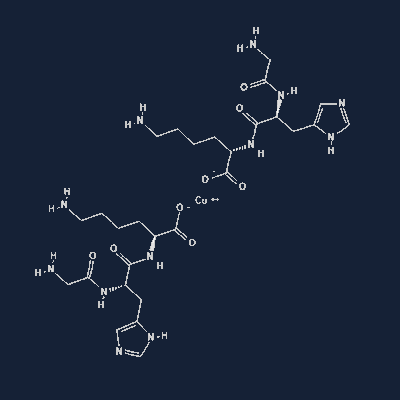
Source: PubChem, National Library of Medicine
Quality Specifications
- Purity: ≥99% (HPLC verified)
- Form: Lyophilized powder
- Testing: Third-party COA — Download current batch COA
- Manufacturing: Synthesized via solid-phase peptide synthesis (SPPS)
Published Research
Additional information
| Weight | 0.0625 lbs |
|---|
Storage Instructions
All our research peptides are manufactured using a lyophilization (freeze-drying) process. This method is designed to maintain product integrity and allows vials to remain stable during shipping for approximately 3–4 months.
Once a vial is reconstituted with bacteriostatic water, it should be stored in the refrigerator to help maintain stability. Under these conditions, reconstituted material is generally considered stable for up to 30 days.
Lyophilization is a dehydration technique in which compounds are frozen and then exposed to low pressure. This causes the water in the vial to sublimate directly from solid to gas, leaving behind a stable, crystalline white structure. This powder can be kept at room temperature until reconstitution.
Upon receipt, products should be stored away from heat and light. For short-term use, refrigeration at approximately 4°C (39°F) is suitable. For long-term storage (several months to years), vials may be placed in a freezer at approximately -80°C (-112°F). Freezing is the preferred method for preserving product stability over extended periods.
⚠️ Important Notice: These products are intended for research use only. Not for human consumption.
Certificate of Analysis
Every batch undergoes rigorous third-party laboratory testing to verify identity, purity (≥99%), and quality before release.
View Certificate of AnalysisRelated products
-
GLP-1 S
Price range: $160.00 through $325.00Select options This product has multiple variants. The options may be chosen on the product page -
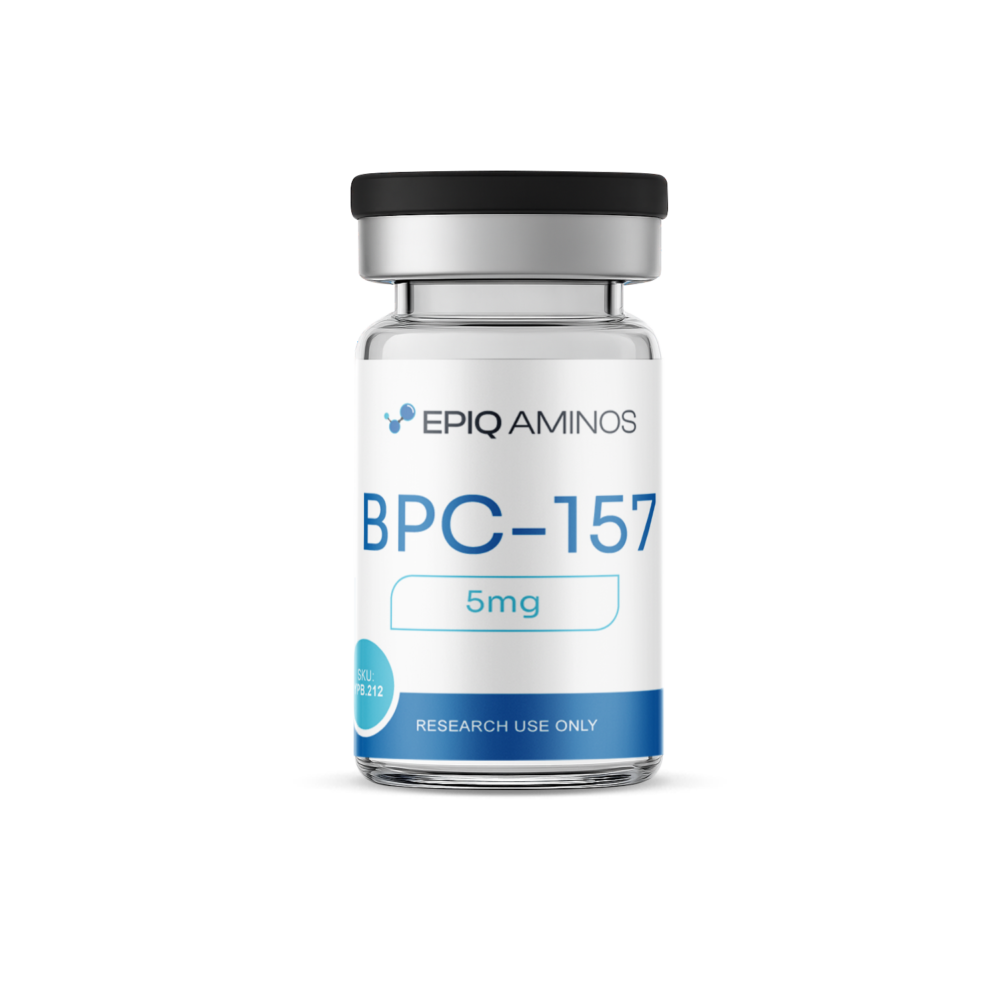
BPC-157
Price range: $55.00 through $170.00Select options This product has multiple variants. The options may be chosen on the product page -